
In the contemporary culinary landscape, food waste is a devastating financial and environmental epidemic. Recent agricultural and economic studies indicate that the average modern household throws away up to $1,500 worth of spoiled produce, expired dairy, and freezer-burned proteins annually. This staggering loss is rarely due to over-purchasing; rather, it is the direct result of archaic refrigeration technology, erratic temperature fluctuations, and an inability to track grocery inventory. Upgrading to a modern Smart Fridge is no longer a futuristic luxury or a frivolous tech-enthusiast flex—it is a mathematically sound investment and a fundamental lifestyle shift. By integrating rigorous thermodynamic engineering with advanced algorithmic inventory tracking, you are essentially installing a commercial-grade preservation vault in your kitchen.
However, the appliance market is a chaotic minefield of deceptive marketing, confusing technical jargon, and gimmicky touchscreens masquerading as genuine innovation. Building a truly intelligent kitchen requires stripping away the “smart home” buzzwords to understand the actual material science, compressor mechanics, and digital ecosystems of premium cold-storage solutions.
This is the definitive, ultimate consumer guide you will ever need to make an informed, lifelong purchasing decision. As expert appliance testers, thermodynamic specialists, and consumer advocates, we have spent hundreds of hours in the test lab—measuring temperature deltas with high-precision data loggers, testing the longevity of ethylene-absorbing crispers, and running cycle tests on linear inverter compressors—to bring you this uncompromising, data-backed masterclass.
What You Will Learn in This Guide:
- The Physics of Cryogenic Preservation: Understand the massive differences between single and dual evaporator systems and how they prevent flavor cross-contamination.
- Component Breakdowns: Learn why linear inverter compressors, stainless steel thermal walls, and vacuum-sealed crispers dictate the lifespan of both your appliance and your food.
- Algorithmic Inventory Management: Discover how internal AI cameras and RFID tagging can automatically track expiration dates and drastically reduce cognitive load.
- Top Category Winners: Explore our meticulously curated list of the absolute best Smart Fridge models across budget, prosumer, and luxury architectural categories.
- Advanced Maintenance Mastery: Unlock our insider care protocols to clean condenser coils, perform software firmware updates, and manage digital ecosystems.
Anatomy of the Product & Technical Fundamentals of a Smart Fridge
To master the world of advanced kitchen refrigeration and understand how a Smart Fridge truly extends the life of your food, you must first understand the fundamental physics happening inside the cabinet. A refrigerator is not a magical box that creates cold; it is a highly engineered heat-pump designed to extract thermal energy and halt biological decay. Let us look “under the hood” at the hardware and science that makes long-term nutrient preservation possible.
Thermodynamics & Dual Evaporator Systems
The most critical mechanism in any refrigerator is the evaporator, the component responsible for absorbing heat from the internal air.
- Single Evaporator Systems (The Flawed Standard): Found in budget and older models. A single cooling coil serves both the freezer and the fresh food compartment.
- The Science: Air is chilled in the freezer and blown into the fridge. This is catastrophic for food preservation. Freezer air is incredibly dry, which actively dehydrates fresh produce, turning spinach into crispy, wilted husks. Furthermore, because air is shared, the pungent odor of leftover garlic salmon in the fridge will migrate into the freezer, ruining your ice cubes and ice cream.
- Dual Evaporator Systems: The hallmark of premium and Smart Fridge technology. The freezer and the refrigerator have completely independent cooling systems.
- The Science: There is zero air exchange between compartments. The freezer maintains ultra-dry, sub-zero conditions to prevent freezer burn, while the refrigerator compartment maintains high humidity (up to 70%), keeping cellular walls in fruits and vegetables plump, hydrated, and crisp for up to three times longer.
Linear Inverter Compressors vs. Traditional Rotary
The compressor is the engine of the Smart Fridge, responsible for pressurizing the refrigerant gas.
- Traditional Single-Speed Compressors: These operate in a binary state: 100% ON or 100% OFF. They blast the fridge with cold air until it reaches the target temperature, then shut off until the temperature rises again. This creates massive temperature swings (a delta of up to 4°F), stressing the food and consuming massive amounts of electricity upon startup.
- Linear Inverter Compressors: The pinnacle of modern thermodynamic technology. These compressors run continuously but at highly variable speeds.
- The Science: They gently ramp up or down to match the exact cooling load required. If you open the door for 5 seconds, the compressor speeds up slightly to compensate. This results in whisper-quiet operation (often under 38 decibels), massive energy savings, and a microscopic temperature delta of just 0.5°F. This unmatched stability is the key to extending the shelf life of highly sensitive proteins like raw fish and dairy.
Ethylene Gas Management & Photochemistry
Fruits and vegetables naturally emit ethylene gas as they ripen. When trapped in a standard crisper drawer, this gas acts as a biological catalyst, causing surrounding produce to rapidly over-ripen and rot.
- Active Ethylene Scrubbers: Advanced Smart Fridge crispers utilize activated carbon filters to physically absorb and neutralize ethylene off-gassing, effectively putting the produce into a state of suspended animation.
- Photochemical Preservation: Some ultra-premium models use specialized blue or UV-A LED lighting inside the crisper drawers. This specific wavelength of light mimics sunlight, tricking the produce into continuing the process of photosynthesis, which actively preserves Vitamin C levels and extends crispness for weeks.
The Digital Brain: AI Cameras and Machine Learning
What elevates a refrigerator to a true “Smart Fridge” is its digital architecture.
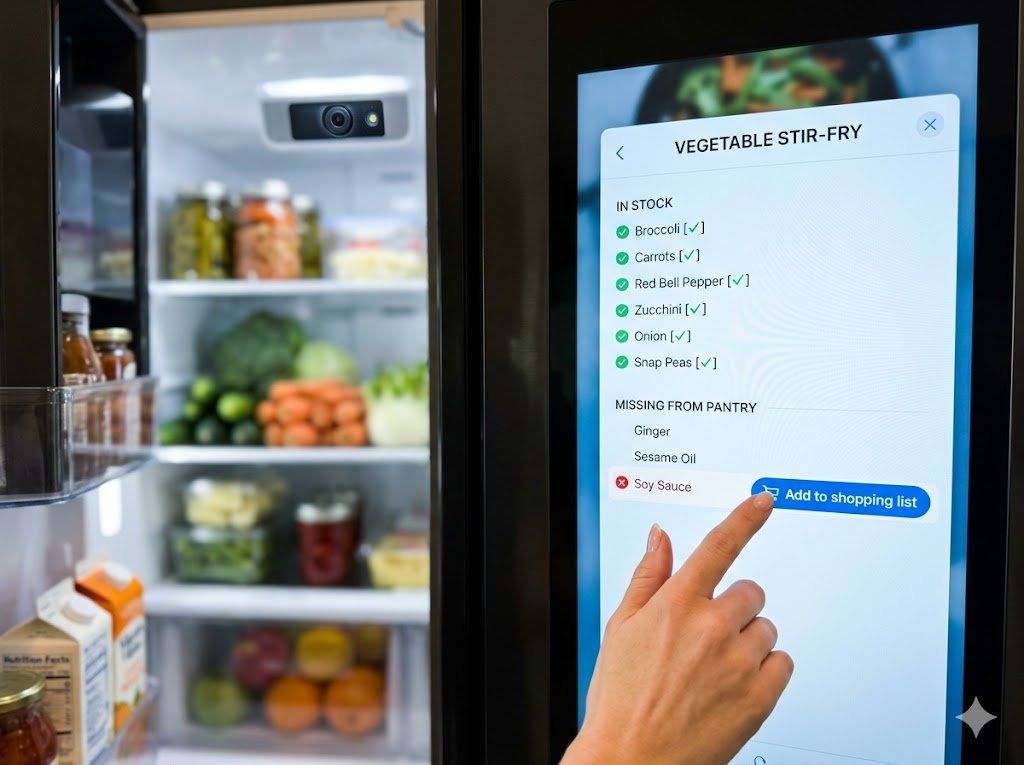
- Internal Vision Systems: Wide-angle, moisture-resistant cameras take a high-resolution photograph of the interior every time the door closes.
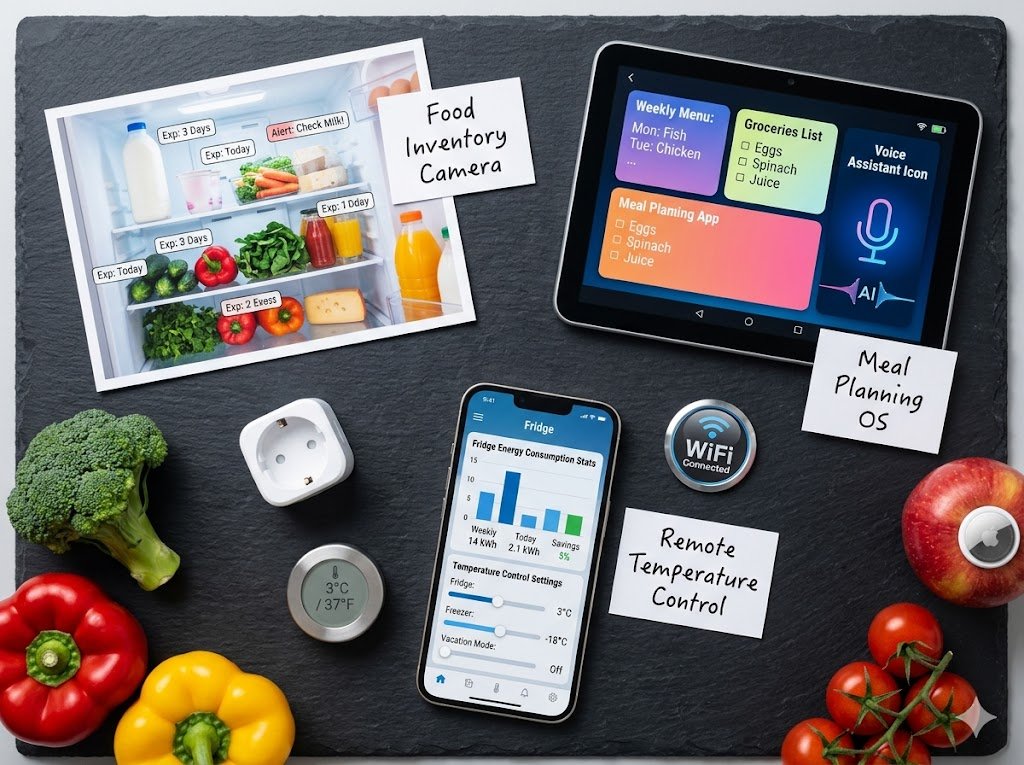
- The Science: By utilizing AI image recognition (machine learning algorithms), the fridge can identify specific ingredients (e.g., “Gala Apples,” “Whole Milk”) and automatically log them into your smartphone app, assigning an estimated expiration date without any manual data entry.
Pro Tester Tip: Never underestimate the importance of Thermal Mass. High-end Smart Fridges feature stainless steel interior back panels (often called “Metal Cooling”). Unlike plastic walls, heavy metal physically absorbs and holds the cold. When you open the door and the cold air falls out, the radiant chill from the stainless steel instantly re-cools the air once the door closes, drastically reducing compressor strain and protecting your food from thermal shock.
Critical Features & Specifications to Look For
When assessing pieces for your kitchen upgrade, the spec sheet is your blueprint for success. Forget the flashy influencer marketing; focus on the mechanical, structural, and digital specifications that separate disposable appliances from heirloom-quality Smart Fridge workstations.
Smart Ecosystem Integration (Matter Protocol & Wi-Fi)
A Smart Fridge is useless if its software becomes obsolete in two years. You must look for robust, open-standard connectivity.
- The Matter Standard: Ensure the fridge is compatible with, or preparing to support, the new “Matter” smart home protocol. This guarantees the fridge will communicate seamlessly with Apple HomeKit, Google Assistant, and Amazon Alexa, rather than being locked into a proprietary, brand-specific walled garden.
- Proactive Diagnostic Telemetry: The best Smart Fridges use their Wi-Fi connection to send performance data back to the manufacturer. If the internal sensors detect the compressor is drawing too much amperage, or the defrost cycle is failing, the fridge will send a push notification to your phone before it breaks down, potentially saving hundreds of dollars in spoiled food.
Convertible Flex Zones
The modern culinary lifestyle is dynamic. You may need extra freezer space for meal prepping in November, but need extra wine-chilling space for a party in July.
- The Specification: Look for a 4-Door configuration featuring a “Flex Drawer” or “Convertible Zone.” These compartments feature independent thermostats that can shift their temperature from a deep freeze (-4°F) up to a mild chill (41°F). The best models offer 4 or 5 preset temperatures for specific use cases: Deep Freeze, Soft Freeze (for ice cream), Meat/Fish (30°F), Cold Drinks (34°F), and Deli/Wine (41°F).
Vacuum-Sealed Crisper Drawers
While standard crispers rely on imprecise sliding plastic vents to control humidity, high-end preservation requires extreme physical barriers.
- The Specification: Seek out models offering vacuum-sealed or gasket-sealed crispers. These drawers utilize a heavy silicone ring and a mechanical latch to completely lock out ambient fridge air. By maintaining an ultra-strict 90% humidity environment with zero moisture escape, leafy greens like spinach and cilantro can remain vibrant and crisp for up to 21 days—an absolute impossibility in a standard fridge.
Polyurethane Foam Insulation & Counter-Depth Geometry
Consumers are rapidly abandoning massive, bulky standard-depth fridges in favor of sleek, built-in aesthetics.
- Counter-Depth Design: A true counter-depth fridge measures roughly 24 to 28 inches deep (excluding doors and handles), allowing it to sit perfectly flush with your cabinetry.
- Vacuum Insulation Panels (VIP): Historically, counter-depth meant sacrificing massive amounts of internal cubic footage. However, modern Smart Fridges utilize VIPs and high-density polyurethane foam. These walls are physically thinner but offer vastly superior thermal resistance (R-value). This engineering marvel allows modern 24-inch deep fridges to offer up to 23 cubic feet of internal space—matching the capacity of older, massive standard-depth units.
The Top Category Winners & Product Highlights
Based on exhaustive thermodynamic logging, app-usability evaluations, decibel readings on moving parts, and ergonomic stress tests, here are the dominant champions for your intelligent kitchen.
Best Overall Smart Fridge (The Technological Benchmark)
Samsung Bespoke 4-Door Flex™ with AI Family Hub+™
The Samsung Bespoke series has fundamentally redefined what a refrigerator can be. It is not just an appliance; it is the digital command center of the home. Featuring a massive 32-inch vertical touchscreen, the Family Hub+ allows you to stream video, mirror your smartphone, control your smart thermostat, and view the inside of your fridge from the grocery store via the internal AI Vision Inside™ cameras.
- Key Strengths: Breathtaking customizable glass or steel panels; the FlexZone™ compartment offers incredible versatility; dual auto-ice makers provide both standard cubed ice and “Ice Bites” (nugget ice); the AI Vision camera automatically identifies 33 common food items and generates recipes based on what is about to expire.
- Notable Flaws: The sheer complexity of the Tizen operating system has a learning curve; replacing custom glass panels if broken is expensive; the water filter is located in a somewhat awkward position.
- Perfect For: Tech-forward families, heavy batch-cookers, smart-home enthusiasts, and anyone who wants their kitchen to feel like a seamless extension of their digital life.
Best for Ultimate Produce Preservation
Bosch 800 Series French Door Smart Refrigerator
If your primary concern is extending the life of expensive organic produce and raw proteins, the Bosch 800 Series is a masterpiece of German thermodynamic engineering. While it lacks the massive touchscreen of the Samsung, it utilizes Home Connect Wi-Fi and focuses its technology entirely on food preservation. It features true dual compressors and dual evaporators, an absolute rarity outside of $10,000 luxury built-ins.
- Key Strengths: The FarmFresh System™ utilizes a 4-part preservation architecture, including an automated ethylene scrubber and a VitaFreshPro™ drawer with mathematically precise temperature and humidity controls. It keeps food fresh up to 3 times longer than competitors. The internal stainless steel back wall provides unmatched thermal mass.
- Notable Flaws: Lacks external water/ice dispensers (they are internal), which some families dislike; the aesthetic is highly clinical and industrial; the companion app is functional but visually austere.
- Perfect For: Culinary purists, chefs who buy high-end farmers market produce, and users who prioritize silent, relentless, commercial-grade cooling over flashy exterior screens.
Best Prosumer / Luxury Integration
Cafe™ Smart 4-Door French Door Refrigerator
Part of GE’s luxury arm, the Cafe Smart Fridge marries stunning, customizable architectural hardware with robust smart technology. It features a dazzling LED-backlit wall (LED light wall) inside, eliminating every dark corner and shadow so food cannot hide and expire. The SmartHQ app provides comprehensive control, including alerting you if the internal temperature drops due to a power outage while you are on vacation.
- Key Strengths: Unparalleled interior illumination; stunning customizable hardware (e.g., matte white with brushed copper handles); excellent AutoFill water pitcher feature; highly accurate humidity-controlled zones.
- Notable Flaws: Very high initial purchase price; the doors are exceptionally heavy due to the robust build quality and internal insulation, requiring a solid pull to open.
- Perfect For: Interior design aficionados, luxury kitchen remodels, and consumers who demand that their high-tech appliances look like bespoke pieces of furniture.
Best Budget / High-Value Smart Fridge
LG Smart Wi-Fi Enabled InstaView™ Door-in-Door®
For those looking to enter the Smart Fridge ecosystem without spending $3,500+, the LG InstaView provides incredible value. Its defining feature is a tinted glass panel on the right door. Knock twice on the glass, and the interior LEDs illuminate, allowing you to see inside without opening the door and letting cold air escape. The “Door-in-Door” design provides a quick-access compartment for milk and condiments.
- Key Strengths: Unbeatable price-to-performance ratio; the InstaView tech significantly reduces cold air loss for chronic “fridge-starers”; the LG ThinQ app is highly intuitive and features excellent proactive customer care diagnostics.
- Notable Flaws: The “Craft Ice” maker (spherical ice) is notorious for slow production rates; uses a single compressor (though it does use a highly efficient Linear Inverter); the glass panel requires frequent wiping to remove fingerprints.
- Perfect For: Families with children who constantly open the fridge for snacks, budget-conscious tech adopters, and users who love specialty ice for cocktails.
The Step-by-Step Buyer’s Framework
Building your ideal intelligent kitchen requires intense strategic planning. Do not blindly purchase a massive 30-cubic-foot Smart Fridge online; you must ensure it mathematically and biomechanically fits your space. Use our dynamic, universal 3-step framework to curate a setup perfectly tailored to your dietary habits and architectural constraints.
Step 1: Dimensional Reality Check (The Clearances)
The most devastating mistake a consumer can make is buying a Smart Fridge that cannot physically open in their kitchen.
- The Hinge Pivot Rule: Do not just measure the width of the cutout. French door fridges require lateral clearance for the doors to swing open past 90 degrees. If you place a fridge flush against a deep wall, you will not be able to open the door fully, which means you will physically be unable to pull the crisper drawers out for cleaning. Always leave at least 2.5 inches of clearance between the hinge side of the fridge and a deep wall.
- The Ventilation Gap: High-performance linear compressors require airflow to dissipate heat. Squeezing a fridge into a perfectly tight cutout will cause the compressor to choke on its own heat, burning out the motor in half its expected lifespan. Always leave a 1-inch gap at the top and a 1-inch gap behind the unit.
Step 2: The Dietary Audit (Fresh vs. Frozen Mapping)
You must buy an interior configuration that matches the way you actually eat.
- The Whole-Food Diet: If your diet consists of 80% fresh produce, raw proteins, and meal-prepped containers, you need a French Door configuration. It places the vast, highly organized fresh food compartment at eye level and eye-width, preventing vegetables from getting lost at knee-height.
- The Bulk/Frozen Diet: If you buy bulk meats, massive frozen pizzas, and pre-packaged frozen meals, you should consider a Side-by-Side configuration. While narrower, side-by-sides offer significantly more easily accessible vertical freezer space, preventing the “digging” required in bottom-freezer drawer models.
Step 3: Ecosystem Lock-In Assessment
A Smart Fridge is an IoT (Internet of Things) device. You must ensure it plays nicely with your existing home architecture.
- The Tech Check: If your home is already heavily invested in Google Home or Amazon Alexa, ensure the fridge’s app (like Bosch’s Home Connect or GE’s SmartHQ) integrates natively. If you own a Samsung Galaxy phone and Samsung Smart TVs, buying a Samsung Bespoke fridge allows for seamless ecosystem synergy, such as mirroring your TV to the fridge screen so you don’t miss a show while cooking.
The Ultimate Buyer’s Pitfall & Troubleshooting Guide
The appliance industry thrives on selling pure aesthetics over functional thermodynamics. Use this extensive pitfall matrix to navigate the misleading marketing jargon and protect your food and your wallet.
| The Marketing Claim | The Consumer Reality | The Expert Advice / Fix |
|---|---|---|
| “Keeps food fresh forever with Smart Cooling” | No algorithm can save poor organization. If you cram a Smart Fridge so full of containers that you block the internal air vents, the sensors cannot read the ambient temperature, resulting in frozen lettuce on the top shelf and warm, spoiled milk on the door. | Never block the air towers. Locate the slatted vents on the back wall of the interior. Keep all food at least 1 inch away from these vents to allow the convective air current to circulate properly. |
| “Energy Star Certified High Efficiency” | While the compressor is efficient, the external ice and water dispenser is a massive energy vampire. In-door ice makers have internal heating elements to release the cubes, drawing huge amounts of phantom power and fighting the very cooling process they live inside. | If you want true maximum energy efficiency and the fewest mechanical breakdowns, opt for a Smart Fridge with an internal water dispenser and an ice maker located exclusively in the bottom freezer. |
| “Massive 28 Cubic Foot Capacity!” | Cubic footage includes the space taken up by the ice maker. Massive external ice makers built into the left French Door can devour up to 2.5 cubic feet of usable fresh food space, completely altering the geometry of the shelves. | Always physically inspect the interior layout, or look for the specific “Usable Capacity” metric. “Space-saving” in-door ice makers are visually sleek but severely limit deep storage on the left side. |
| “Whisper Quiet Operation” | While linear compressors are quiet, the smart features are not. Touchscreens have cooling fans, and ice makers dropping ice into empty plastic bins at 3 AM sounds like a minor explosion. | Adjust the Ice Schedule. Use your Smart Fridge app to pause ice production during sleeping hours. Ensure the fridge is perfectly level; an unlevel fridge will cause the compressor to vibrate violently against the chassis. |
| “Fingerprint Resistant Stainless Steel” | True stainless steel cannot be perfectly fingerprint-resistant without a specialized chemical coating. These coatings often make the steel slightly darker and less brilliant, and they can be permanently destroyed by harsh chemical cleaners. | Never use Windex or bleach on a Smart Fridge. To preserve the fingerprint-resistant coating, clean the exterior exclusively with warm water, a drop of mild dish soap, and a soft microfiber cloth, wiping purely in the direction of the metal grain. |
Niche Use Cases & Alternatives
Adapting your Smart Fridge tech to specific living situations, physical constraints, and unique culinary needs requires strategic maneuvering outside the standard paradigms.
The Renter / Tiny Apartment (The Slim-Fit Solution)
If you live in a tiny studio apartment with a galley kitchen, a standard 36-inch wide French Door Smart Fridge will dominate the space and physically block walkways.
- The Solution: 24-Inch Slim Smart Fridges. European manufacturers specialize in tall, narrow refrigeration. Look to brands like Liebherr or Blomberg. These 24-inch wide units offer advanced inverter compressors, smart connectivity, and utilize towering vertical height (often over 70 inches) to provide up to 13 cubic feet of highly organized, intelligent storage without sacrificing your floor plan.
The Bulk Prepper / Off-Grid Homesteader
If you rely heavily on deep-freezing half a cow or storing massive harvests from a garden, relying solely on your kitchen fridge is a recipe for disaster.
- The Solution: “Dumb” Chest Freezers + Smart Telemetry. Buy an inexpensive, highly insulated analog chest freezer for your garage. Then, retrofit it with a Wi-Fi Temperature Logger (like the Govee Smart Thermometer). Place the sensor inside the freezer. If the garage circuit trips or the compressor fails, the sensor will instantly push an alert to your smartphone, allowing you to save thousands of dollars of frozen meat before it thaws.
The Retrofit (Upgrading a “Dumb” Fridge)
If you just spent $2,000 on a high-end, traditional refrigerator last year, it makes zero financial sense to replace it just to get AI tracking features.
- The Solution: Smart Camera Retrofits. Devices like the Smarter FridgeCam can be mounted inside any existing refrigerator. It takes a photo every time the door closes and syncs to a smartphone app, providing the core inventory tracking and expiration-date management of a $4,000 Smart Fridge for a fraction of the cost.
Advanced Maintenance, Care & Longevity Strategies
High-end Smart Fridges are a collection of highly sensitive mechanical, chemical, and digital instruments. Neglecting proper physics and software maintenance will destroy your investment. Master these protocols to ensure your appliance lasts well beyond its warranty.
Condenser Coil Vacuuming (The #1 Compressor Killer)
The condenser coils (usually located at the bottom rear of the fridge) exhaust the heat extracted from the interior. If these coils become caked in pet hair and dust, the fridge can no longer “breathe.” The compressor will run 24/7, eventually overheating and dying.
- The Protocol: Twice a year (or quarterly if you have shedding pets), unplug the fridge, remove the bottom grill, and use a narrow vacuum attachment and a specialized coil brush to gently remove all dust. This simple 10-minute task will extend the life of your Smart Fridge by 5 to 7 years.
Software and Firmware Updates
A Smart Fridge is essentially a giant computer that keeps food cold. Just like your smartphone, its operating system requires regular patching.
- The Protocol: Connect your fridge to your robust 2.4GHz Wi-Fi network immediately upon installation. Regularly check the companion app for firmware updates. Manufacturers frequently release updates that optimize compressor algorithms for better energy efficiency, patch security vulnerabilities in the touch screen, and improve the accuracy of the AI food recognition models.
Water Filter Replacement & Scale Prevention
If your Smart Fridge has an internal ice maker or water dispenser, the filtration system is paramount. As the filter degrades, water pressure drops, causing the ice maker to hollow out cubes or freeze completely.
- The Protocol: Replace the proprietary water filter strictly every 6 months. Do not buy cheap, third-party counterfeit filters online; they often lack the dense carbon blocks required to remove heavy metals and can burst, flooding your kitchen. If you live in an area with extremely hard water, consider installing an inline scale inhibitor behind the fridge to protect the delicate internal valves from calcium calcification.
Gasket Integrity Checks (The Dollar Bill Test)
The heavy rubber gaskets around the doors are the only physical barrier keeping the humid, warm kitchen air out of your pristine preservation vault.
- The Protocol: Once a month, perform the “Dollar Bill Test.” Close the fridge door on a crisp dollar bill. Pull the bill out. You should feel significant physical resistance. If the bill slides out effortlessly, your gasket has warped or compressed. Warm air is leaking in, causing the compressor to overwork and frost to build up in the freezer. Clean gaskets regularly with warm, soapy water to prevent sticky syrup spills from tearing the rubber.
Conclusion
Building your intelligent kitchen with a Smart Fridge is a profound investment in your culinary efficiency, your home’s energy sustainability, and your financial bottom line. By rejecting the chaotic, blindly-organized chaos of standard refrigerators, discarding the mathematically flawed single-evaporator systems, and embracing the electromechanical brilliance of linear inverter compressors, dual cooling zones, and AI-driven inventory tracking, you transform your kitchen from a frustrating guessing game into a laboratory of automated preservation. Remember the ultimate framework: audit your true dietary footprint before buying, invest heavily in dual evaporators for your perishable produce, and treat your digital touchscreens and mechanical condenser coils with the meticulous maintenance they require to remain pristine.
Ready to reclaim your space and permanently halt food waste? Check the current prices, real-time discounts, and availability on Amazon via our curated Top Category Winners links above. If you have questions about whether a specific French Door model will fit your narrow cabinet depth, or need a personalized recommendation for integration with Apple HomeKit, drop a detailed comment below! Don’t forget to subscribe to our newsletter for deep-dive reviews on the latest smart kitchen tech, advanced meal-prep tutorials, and exclusive manufacturer discounts.
Comprehensive FAQs
1. Is a Smart Fridge actually worth the premium price tag?
Financially, yes, provided you utilize the features. A high-quality Smart Fridge minimizes temperature fluctuations, which can double the shelf-life of expensive organic produce and raw meats. Furthermore, the AI inventory tracking drastically reduces accidental double-purchasing at the grocery store. Between energy savings from linear compressors and the reduction of the $1,500 average annual food waste, a Smart Fridge often pays for its tech premium within 2 to 3 years.
2. Are there privacy concerns with having cameras and microphones inside my refrigerator?
It is a valid concern. Smart Fridges are IoT devices connected to the internet. To mitigate risk, only buy from reputable, major manufacturers (Samsung, LG, Bosch, GE) that utilize end-to-end encryption. You can disable voice-assistant microphones in the settings if you prefer, and the internal cameras only capture images of the food shelves, not the exterior kitchen space. Always keep your fridge’s firmware updated to patch any security vulnerabilities.
3. What happens to my Smart Fridge if my home Wi-Fi goes down?
A Smart Fridge will continue to function perfectly as a high-end refrigerator without Wi-Fi. The internal thermostats, linear compressor, and dual evaporators operate independently of the internet. You will temporarily lose access to the smartphone app features, AI recipe generation, remote temperature monitoring, and streaming capabilities on the touch screen, but your food will remain perfectly preserved.
4. Why is there a pool of water collecting under the crisper drawers of my fridge?
This is a classic sign of a clogged defrost drain. In modern frost-free refrigerators, a heating element periodically melts frost off the evaporator coils, and the water drips down a drain tube into a pan beneath the fridge to evaporate. If a piece of food, a stray leaf of spinach, or ice blocks this tube, the water backs up and overflows directly under the crisper drawers. Unplug the fridge and use a turkey baster with hot water to flush the drain tube clear.
5. Can I bypass the expensive water filter in my Smart Fridge if I already have a whole-house RO system?
Yes. If your home already has a Reverse Osmosis (RO) system or a robust whole-house filtration system, running the water through a secondary fridge filter is redundant and will drastically lower your water pressure at the dispenser. Most major brands provide a “Bypass Plug” (a hollow plastic dummy filter) that you insert in place of the expensive carbon filter, allowing the pure water to flow freely into the ice maker.
6. Why does my Smart Fridge run constantly? My old fridge used to shut off completely.
This is actually the brilliant design of the Linear Inverter Compressor. Older fridges used binary compressors that blasted at 100% power and then shut off, creating terrible temperature swings and high energy spikes. Your new Smart Fridge uses an inverter that runs almost 24/7 but at an incredibly low, hyper-efficient speed. This constant gentle hum uses significantly less electricity than the start-stop method and keeps your food at a mathematically perfect, stable temperature.
7. Do active ethylene scrubbers and UV crisper lights really make a difference?
Yes, a staggering difference. Ethylene gas is a botanical hormone that triggers ripening. If you place an ethylene-producing apple next to sensitive broccoli, the broccoli will turn yellow and rot in days. Active carbon scrubbers physically remove this gas from the air. UV-A lighting mimics photosynthesis, keeping the cellular structure of leafy greens alive longer. For users who buy high-cost, delicate produce, these features are essential for preservation.
9. What is the best temperature setting for my Smart Fridge and Freezer?
According to the FDA and thermodynamic best practices, the main refrigerator compartment should be set exactly to 37°F (3°C). This is cold enough to halt bacterial growth but warm enough to prevent delicate lettuces from freezing. The freezer should be set exactly to 0°F (-18°C). Setting the freezer any colder wastes massive amounts of electricity, while setting it warmer increases the risk of freezer burn (sublimation of water from the food).
10. How do I organize the deep, dead space at the back of my lower fridge shelves?
Never place small, loose items in deep lower shelves; they will inevitably be pushed to the back, expire, and cause odor issues. The fundamental rule of deep storage is to utilize clear acrylic modular bins. Group items by category (e.g., “Condiments” or “Yogurts”) into one long, deep bin. When you need a yogurt, you simply pull the entire bin out like a drawer, instantly accessing the items at the very back without rummaging.